APPLICATION DEADLINE OCTOBER 16TH
Fostering Future Climate Leaders
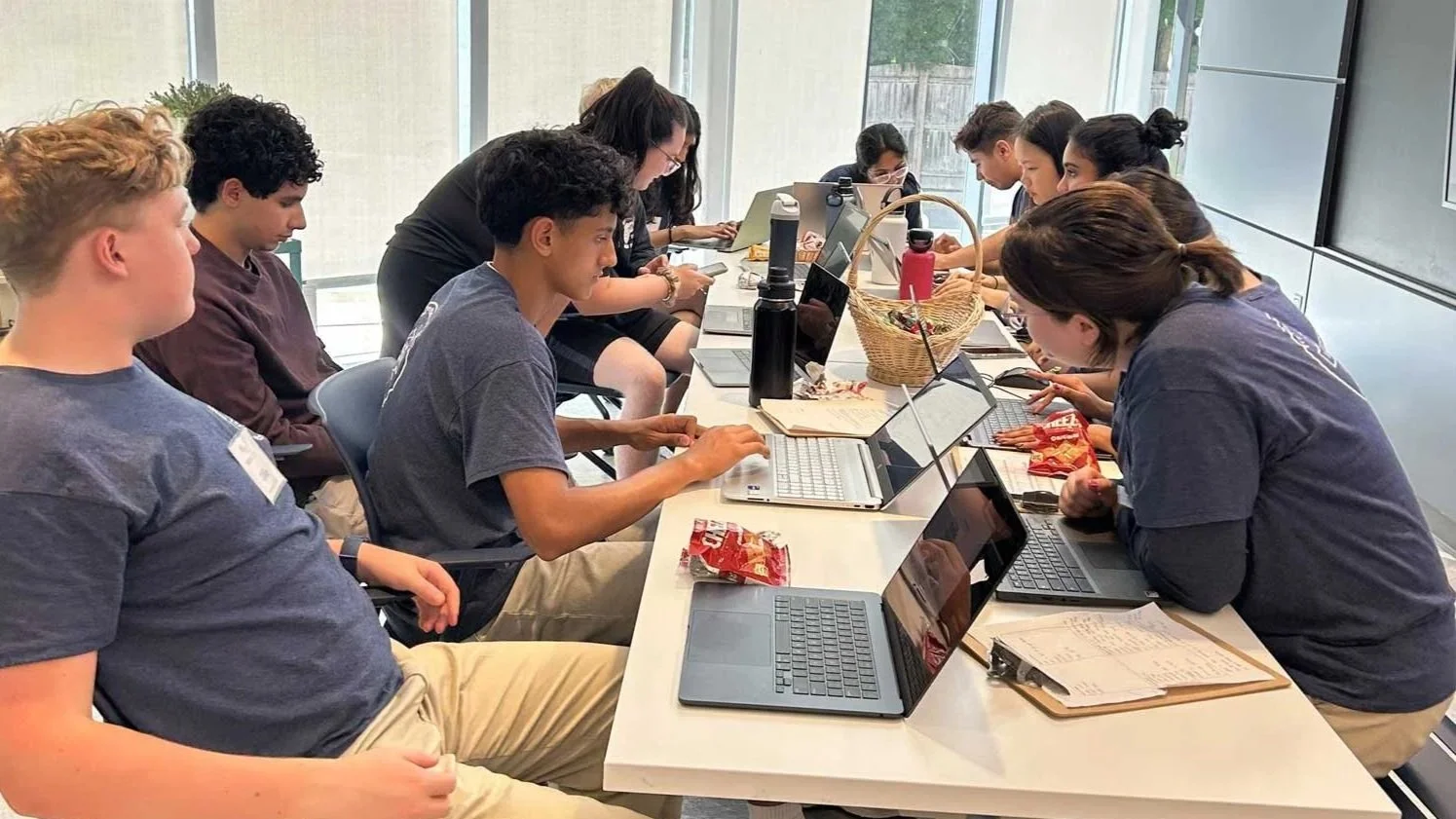
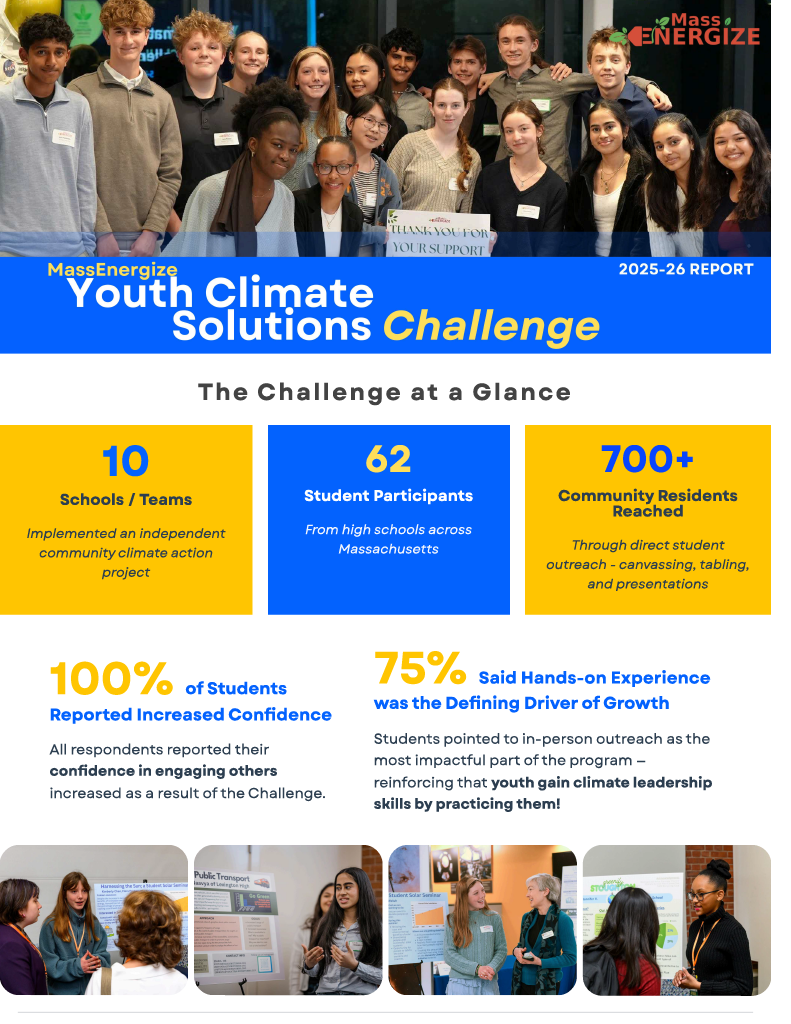
High School students in MA have an opportunity to positively impact their community and gain experience designing and implementing a climate-focused program as part of this challenge.
Are there students in your high school ready to create real impact?
Then MassEnergize’s Youth Climate Solutions Challenge is for them.
The Youth Climate Solutions Challenge is an after-school community-based STEM program designed and directed by MassEnergize for high school students across Massachusetts. This climate leadership, team-based competition challenges students to design and implement clean energy and climate solutions, stepping outside the classroom to lead real-world outreach campaigns.
Mentorship for participating High Schools in Eastern Massachusetts is provided by Dean Berg and the Green Community Catalysts team.
Empowering & Engaging Our Youth
Benefits for the Students and School:
Real STEM learning: students apply data collection, research, and design thinking to real local problems — not just hypothetical ones.
Hands-on leadership: teams of 2-6 students (in grades 9-12) design and implement their own clean-energy outreach campaigns in the community, engaging with residents and municipal leaders.
Fully supported, low lift for you: MassEnergize & Green Community Catalysts provide toolkits, training, webinars, and advisor coaching throughout the Challenge.
Funding built in: every selected school receives a $500 seed grant, plus $1,000 / $750 / $500 prizes for top performing teams. And students love competing for these prizes!
Career connections: students receive mentorship and have their portfolios reviewed by clean energy industry professionals.
How it Works
A nine-month journey during the school year takes students from early ideas in September to final Awards Night in May.
Steps along with way:
Research — Collect baseline data and pinpoint real community-level problems
Design — Craft a bold yet practical climate and clean-energy solution
Engage — Talk to neighbors, municipal officials, and local partners
Launch — Take the campaign live in local communities
Tell the Story — Produce a short video capturing the project
Showcase — Present a poster at the Community Climate Leaders Conference
Submit — Document all project work in a final digital portfolio
Celebrate — Come together to learn from peers and receive prize awards

Timeline
Month & Key Activities
Sept 2026: Challenge launch & school outreach
Sept - Oct 2026: Informational webinars for interested students and schools
Oct 16th: Application deadline
Nov 2026: “Everything You Need to Know” Webinar Series; begin research & campaign planning
Dec 2026: Finalize campaign design
Jan 2027: Campaign launch & implementation begins
Feb 2027: Campaign implementation continues; video production begins
Mar 2027: Video submission; Poster presentation preparation begins
April 13th: Poster presentation at the Community Climate Leaders Conference (in Norwood, MA)
April 19th: Campaign concludes; Poster presentation & portfolio due
May 2027: Awards Night 🎉🎉🎉

Program Structure
For participating schools in Eastern Massachusetts:
Students form teams of 2-6 members per team
Teams are divided by region; up to 15 teams per region
Each team is supported by a teacher or community advisor
Green Community Catalysts (GCC) provides mentorship and support throughout the year
Teams collaborate with local sustainability committees, climate organizations, and municipal staff
Teams must demonstrate creativity, innovation, community engagement, and impact to receive points
Teams produce a short project video (under 4 min) to aid their campaign
Students present a poster session at the annual Community Climate Leaders Conference
Awards are given to top performing teams at the final Awards Night

Joining the Youth Climate Solutions Challenge
Register your interest to participate
Sign up to one of the Zoom Info Sessions to learn more about the challenge requirements and to ask questions:
* Info session #1 September 30, 3:30pm
* Info session #2 October 5, 3:30pm
* Info session #3 October 12, 7:00pmReach out to Dean Berg at dean@greencommunitycatalysts.com if you have questions or would like guidance on project ideas
Apply here (note that you will be asked to provide a project topic, but this is just an initial idea and can be changed once you get into the planning phase)
(anticipating that these deadline will be extended)
Application Due Date: October 16, 2026
Selected School Teams will be announced Monday, October 26, 2026

Mentoring for Greater Impact
Green Community Catalysts (GCC) is proud to partner with MassEnergize to mentor this year’s Youth Climate Solutions Challenge participating high schools from eastern Massachusetts.
Our mission to train leaders to successfully engage residents for a sustainable planet extends perfectly to this younger generation. We are excited to introduce teens to a career in climate change at the community level.
So let’s start.
It begins with choosing a project topic. Unsure of what it should be? This is often one of the hardest steps for everyone working in a community. But you’re in good hands; GCC has helped numerous organizations around the nation flesh this out as part of their community engagement strategy, and we’re here to help your team as well.
We’ll look at your community together and talk about what types of projects might make the most sense. Once a project is chosen, we can also guide you through various engagement approaches.
Below are some tips to start brainstorming topics. But before you do, remember to register your interest in participating in the Youth Climate Solution Challenge.
Tips for Designing a Project
Our CEO, Dean Berg, has been training community-based sustainability organizations for years on how to design effective programs that engage residents. Here are some recommendations that he has for your school’s students when deciding on a topic and designing the scope of their project.
Choosing a Topic
What are the goals and needs of your town/city?
Check its website to see if your town/city has a Climate Action Plan. Are there areas that are identified or prioritized? Similarly, if there are existing climate-focused groups in the community, what have they done or want to do? (check our map to see if we’ve identified organization working in your town)
What are your students most concerned about? What problem do they want to address?
Do they want to focus on extreme weather event preparation in their town/city (adaptation) or on reducing it’s carbon footprint (mitigation)?
Are they curious to learn more about or promote a specific topic? The non-profit, Green Beverly, has information on 8 “green action” categories for residents to lower their carbon footprint. Perhaps that may spark an interest.
Things to consider when Defining the Project
Who’s your audience? Is this applicable to a wide range of people in the community or a targeted group (ex. low income)
Does this have an awareness and/or carbon reduction impact? And is it measurable?
Is this a project that can be accomplished in the time allowed?
Are resources or other community partners needed to execute this project?
Have Questions?
Email Dean Berg at dean@GreenCommunityCatalysts.com
We are looking forward to working with you and your students!
A Deeper Dive on Community Engagement (optional resources)
-

What it Takes for Climate Organizations to Motivate People to Act
-

5 Tips to Strengthening Community Engagement
-
Want To Get Involved? Ways You Can Help Your Local Climate Organization
-

From Passion to Action: Starting a Local Climate Organization